
Making Connections_
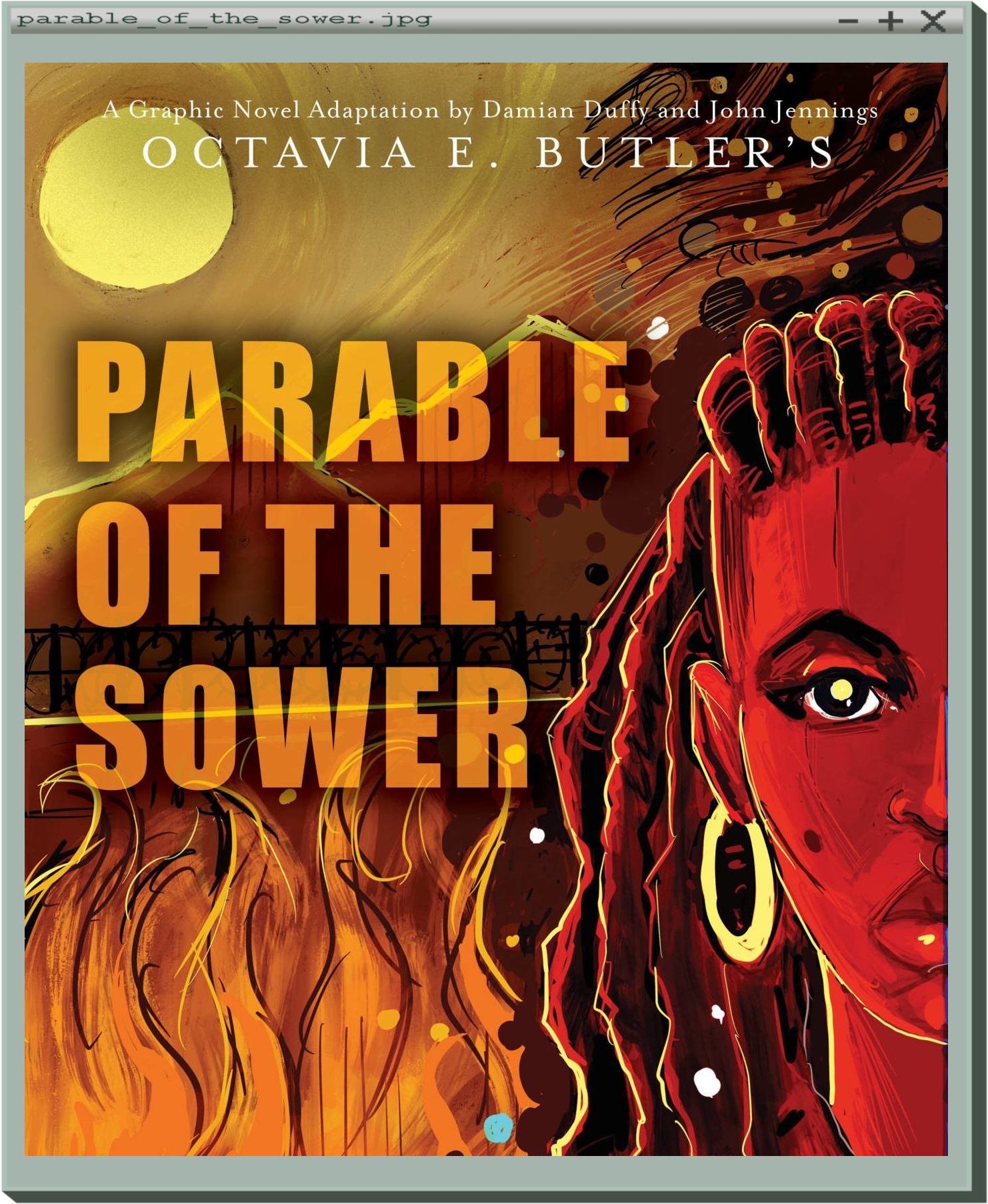
Butler, Octavia E. Parable of the Sower. Abrams Comicarts, 2020.
Octavia Butler's Parable of the Sower imagines a world that has been ravaged by climate disaster, laissez-faire capitalism, and a society that has lost its humanity. Thematically, the book is very focused on empathy as an extension of our humanity. Lauren, the protagonist of the book, has a condition called hyperempathy that causes her to feel the physical pain of others which, in Parable's world means that she is at a disadvantage, hindering her ability to fight and defend herself. Lauren's hyperempathy is a large focus of the book and becomes the driver for many critical moments in her story, despite being a condition that should really spell her certain death in the uncaring, hostile world Parable takes place in. In fact, Lauren's ability to empathize becomes crucial to the formation of her personal philosophy or quasi-religion, Earthseed, which asserts that God is not an entity that controls everything but rather change itself. Her constructed religion attracts followers, forming a community of people connected not only by their shared experiences, but by their differences as well. Octavia Butler uses the speculative fiction format to emphasize the importance of empathy and compassion in a world where it is increasingly rare, not out self-interest but a genuine care for mutual survival. The importance Butler places on community highlights the driving force for the survival of humanity: compassion for one another. Parable's world necessitates compassion and empathy when so much of it has given into the apathy that fuels its own destruction.
Hope in Alien Media_
The 2016 sci-fi drama, Arrival, follows Amy Adams' character, Louise Banks, attempting to communicate with aliens that have arrived on earth in massive spaceships. The alien "heptapods" speak through symbols communicated through the heptapods' limbs. Arrival, like Parable of the Sower, is about the role empathy and compassion play in humanity's survival, focusing on its importance not only in our actions but our language. Arrival posits that compassion is the framework that language needs to be constructed in to ensure humanity's future in the face of division. Furthermore, the movie asserts that fighting for a future for the ones we love, no matter how hard it may be, is how we survive as a collective.

Villeneuve, Denis. Arrival. Paramount Pictures, 2016.
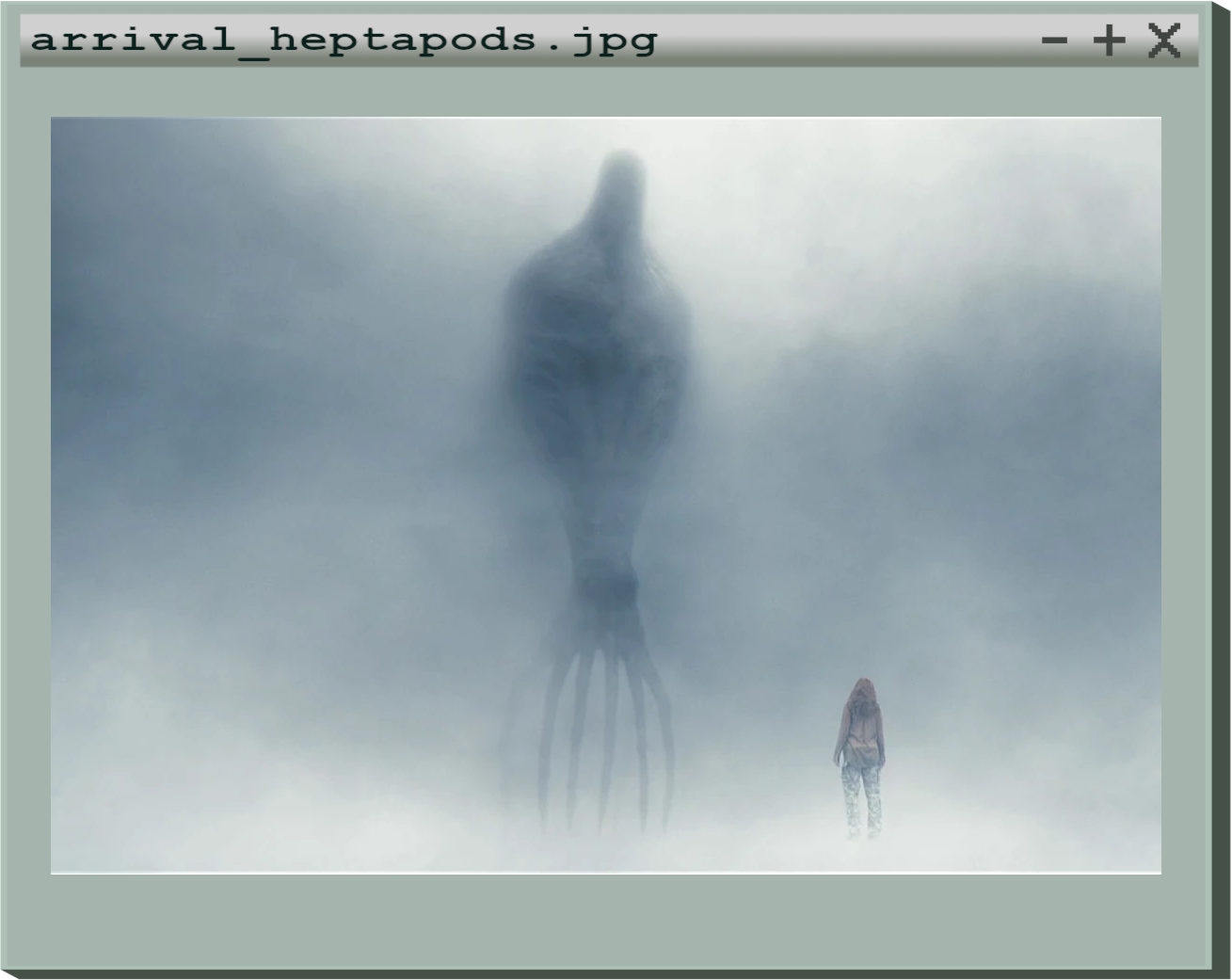
The heptapods of Arrival have the ability to transcend space and time, showing Louise visions of her future which drives the plot towards its conclusion. Through these visions, Louise is able to show the other countries of Arrival's world that the heptapods are not malicious and only want to help humanity. By the conclusion, the heptapods' have profoundly affected Arrival's world, shaping it into a heterotopia—a world that is not defined by its uniformity or homogeny but by its differences. The heptapods are an Other—literally alien, foreign—forcing humanity to reconcile its preconceptions of the danger that the Other presents, challenging it to substitute fear with compassion. They are initially a looming, ominous, presence in their first appearance in the film, but eventually become a symbol for the future they come from; a hopeful future whose world has been shaped by empathy, compassion, and love.
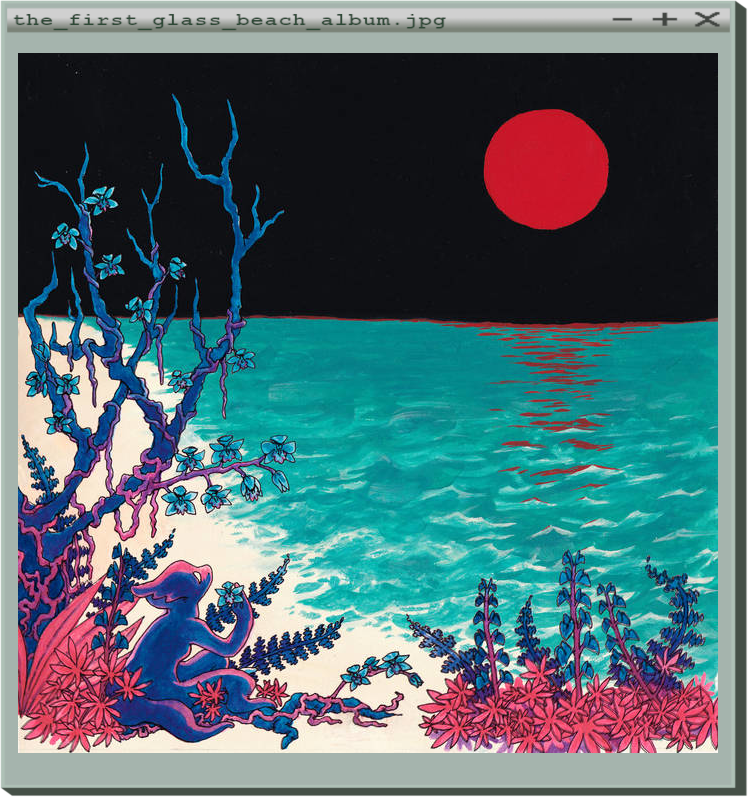
In 2019, glass beach released the first glass beach album, a jazz, punk, prog-rock, pop fusion record that is as original and inventive as it is an emotional experience. In the fifth track, neon glow, singer-songwriter J McClendon sings about nuclear annihilations and aliens coming to earth, inspired by the fringe Trotskyist ideology, Posadism, which combines Marxist theory with UFO speculation. According to McClendon, the song's structure is intentionally ambiguous about whether humanity is saved by the UFOs of the song or destroyed by them, contrasting Arrival's optimistic message. But while neon glow's lyrics are a melancholy departure from the optimism of Arrival, the characters in the song, much like Parable and Arrival, are driven by love.
"You reach out to grab my hand and hold me close
While we float away from everything we loved"
A common thread throughout speculative fiction about the future of humanity is the importance that is placed on empathy, compassion, and love as tools for humanity's survival. I think these themes are incredibly important to explore in the contemporary age because they allow us to reflect on the structures we are familiar with today critically.