
Representations_
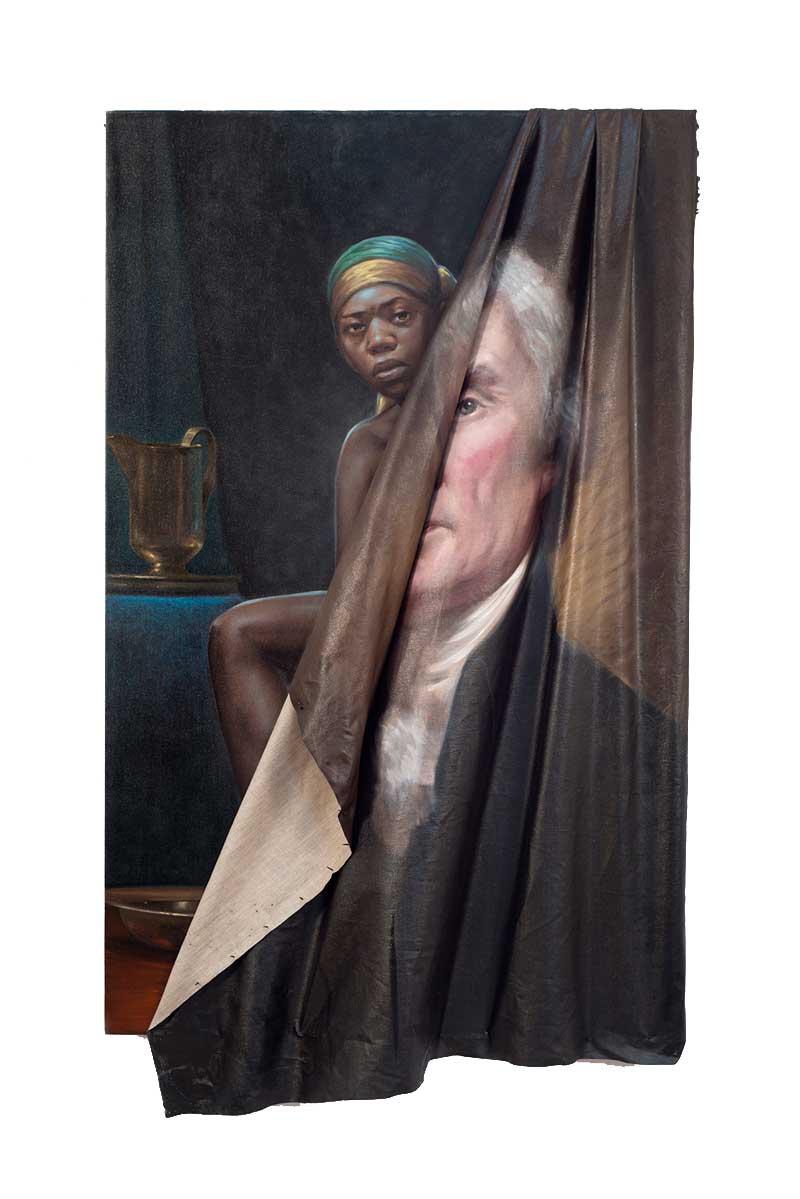
Kaphur, Titus. Behind the Myth of Benevolence. 2014
Titus Kaphur's Behind the Myth of Benevolence, to me, is emblematic of the driving ideas of this quarter's lectures so far. Engaging with the piece requires a critical examination of its historicism, both in terms of the actual historical events that inform the piece as well as its creation process—one that embeds the chronology of its formation into the final product through ghosts of the steps taken by Kaphur in creating the artwork.
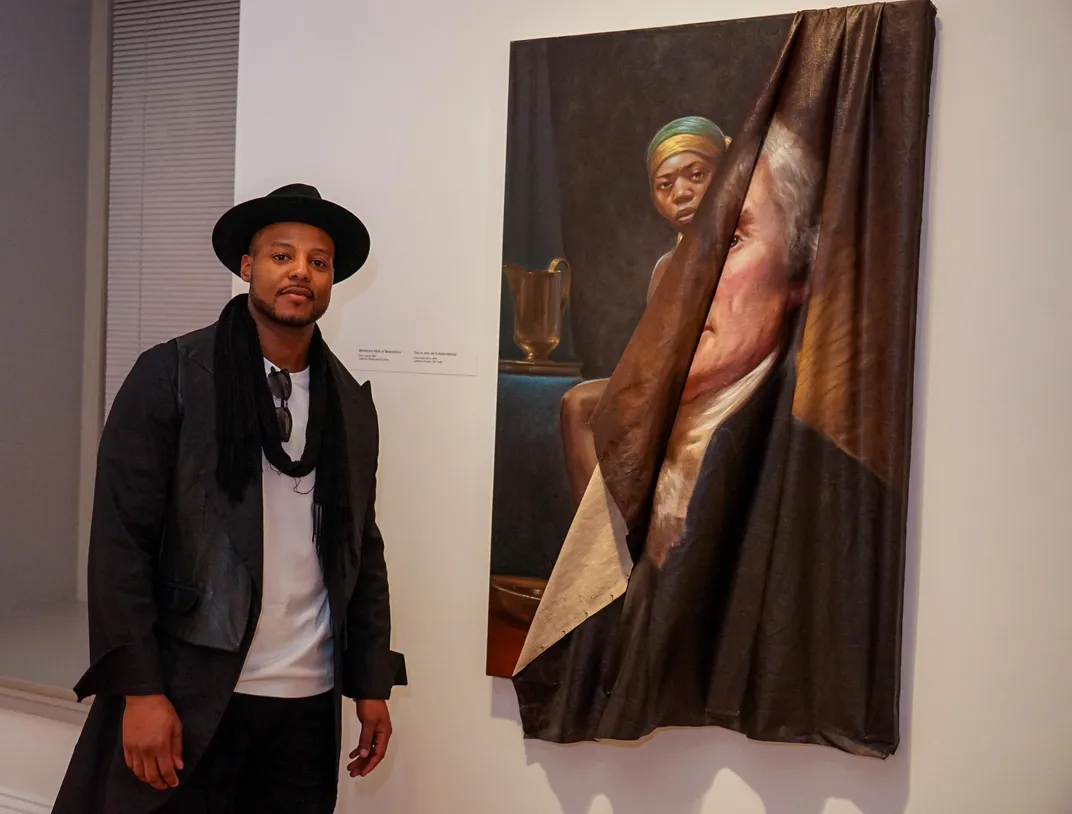
Briceño, Juan Carlos. "Two Artists in Search of Missing History" by Alicia Ault, 4 Apr. 2018. Smithsonianmag.com
Behind The Myth of Benevolence depicts the image of Sally Hemings, an enslaved woman, covered by a falling portrait of founding father, Thomas Jefferson who owned and impregnated her. Hemings sits naked in a dark room while, from what the viewer can see of Jefferson's portrait, Jefferson sits in a well lit room. Many of Jefferson’s features are distorted by the wrinkles of the falling canvas, what remains clearly visible of Jefferson’s facial features is a piercing blue eye which stares down the audience with an authoritative watch. The fact that the image of Jefferson takes up so much space is in contrast to the woman who sits behind him, peeking over the rumpled cloth that blocks much of her body. We are able to make out her facial features clearly and, in opposition to Jefferson’s tense glare, her eyes look much more saddened.
Topology of the Myth_
Photos of the painting on display at the National Portrait Gallery in Washington, D.C. help illustrate what kind of space the painting is occupying, with the falling portrait of Thomas Jefferson extending beyond the canvas, functionally taking up space beyond the canvas, jutted out, closer to the painting’s audience than the covered depiction of the portrait of Sally Hemings behind him. Even hanging almost completely off of the canvas, Jefferson's image still takes up much more space than Heming's.
The spatial dimension of Kaphur's piece serves an important rhetorical purpose, illustrating how much space the myth of the founding fathers as anything more than enslaving rapists takes up in the cultural zeitgeist of the West, specifically in the mythology of the United States.